Monday, August 8, 2011
Chapter Sixteen: Jing-Mei Woo - A Pair of Tickets; epiphany
The final chapter of the book is of Jing-Mei, June's, trip to China to meet her sisters. Before June departs for Shanghai, she asks Lindo Jong to inform ber sisters of their mother's death. In China, her father tells her the story of why her mom left. June is hesitant to meet her sisters because she doesnt know all the details of the story and feels as if she does not know her mother as well as her sisters. June has an epiphany, "And when she said this, I saw myself transforming like a werewolf, a mutant tag of DNA suddenly triggered, replicating itself insidiously into a syndrome, a cluster of telltale Chinese behaviors..."(267). June sees how her mother was right all along about how it is in her blood. She is Chinese and needs to act like it now. After finally meeting her sisters, she does not see much of their mother in them, but the girls are familiar.

Friday, August 5, 2011
Chapter Eleven: Rose Hsu Jordan - Without Wood; balanced sentence

This chapter is about divorce. Rose is divorcing her husband, Ted. Well actually he is divorcing her. One morning Rose goes out to the mailbox to find the divorce papers and a ten thousand dollar check from Ted. Rose takes sleeping pills and sleeps for three days. She is grief stricken and does not know what to do with her life. This divorce caught her off guard. Her mother reaches out to her to offer her advice. Her mother says, "I am not telling you to save your marriage...I only say you should speak up"(193). That sentenced is a balanced sentence because the words contrast the emphasis of the sentence. Rose takes her mother's advice and applies it to the situtaion. Ted tells her she needs to move out because he is moving in with another woman, but she stands up to him. The house is hers and she is staying there. This chapter reinforces the saying that mother's know best. Rose's mother is older, wiser, and more experience, so she has insight Rose cannot see.
Chapter Ten: Waverly Jong - Four Directions; deductive reasoning
Have you ever had exciting information to share, but your afraid of the persons reaction because the last tie you told them something it did not go so well? Well, that is how the news of Waverly's engagement is for her. She takes her mom to lunch in hopes of telling her, but because of deductive reasoning she chickens out. Waverly's last marriage ended because of her mother and she does not want her mom to freak out about this one. Waverly says, "My mother knows how to hit a nerve. And the pain I feel is worse than any other kind of misery" (170). Waverly was very happy and she did not want to feel that pain. Waverly takes her mom to her apartment in hopes of her mother picking up on the fact she is engaged, but her mother says nothing. Waverly invites her fiancee, Rich, to dinner with her mother and her so they can tell her mother. Waverly was not sure how Rich would react because she felt she knew how her mother would react. After all of this, Waverly's mother knows that they are engaged and is happy for them.
Chapter Nine: Lena St. Clair - Rice Husband; parable
Rice Husband is about Lena's husband, Harold. Lena's mother, Ying-ying, is coming over for a visit to see their home. Lena begins the chapter with saying that her mother can predict evil events to occur. This reminds Lena of when she was little and her mother told her that if she did not eat her rice her husband would have 'pock-marks' for every grain she did not eat. After hearing this, Lena made sure to eat every grain of rice until she remembered her neighbor, Arnold. Lena quit eating hoping that would help her to not have to be married to Arnold. This later resulted in her anorexia. When Ying-ying came to the house, she broke a vase on a table. Lena says, "...I start to pick up the broken glass shards. 'I knew it would happen.' and her mother says, 'Then why you don't stop it?'" (165). This quote literally explains Lena's relationship with her husband. She never stopped him, and she let him do what he wanted. Lena needs to stop bad things, the vase and her husband, before they become too big to stop or break.
Chapter Eight: Jing-Mei Woo - Two Kinds; hubris

Chapter Seven: Rose Hsu Jordan - Half and Half; flashback

Chapter Six: Lena St. Clair - The Voice from the Wall; motif

Chapter Five: Waverly Long - Rules of the Game; round character
The daughter of Lindo Jong, Waverly Jong, is the narrator of this chapter. Waverly is also the round character because Waverly changes throughout the chapter. She begins by explaining the area she lives in and her everyday life, but then she discovers the game of chess. She studies and plays chess every day and every day. She is almost perfect at the game of chess. Waverly convinces her Ma to enroll her in tournaments. She is only 429 points away from being a grand master at chess! Her mother is so proud of Waverly that she boasts about her to all of her friends. Waverly does not like the constant bragging of her mother and tells her mother, "I wish you wouldn't do that, telling everybody I'm your daughter" (99). Because of all the attention, Waverly runs away from her family. When she returns home that evening, her family is very angry with her. This chapter reminded me of the parents who have the "Honor Roll" stickers on their car. They have them to show off their child and make their child seem like the best.
Chapter Four: Ying-Ying St. Clair - The Moon Lady; setting
The reader learns from the beginning that Ying-Ying has a bad relationship with her daughter. They never talk anymore and her daughter is consumed by the modern world. She has no time for her mom and only listens to her headphones. We then hear the story of when Ying-Ying first encountered the Moon Lady. The setting of this encounter is in China at Tai Lake. "At the dock, I watched as the old ladies and men started climbing aboard a large boat our family had rented. The boat looked like a floating teahouse, with an open-air pavilion larger than the one in our courtyard. It had many red columns and a peaked tile roof, and behind that what looked like a garden house with round windows" (74). This quote describes the setting, which is different than the other chapters. Ying-Ying begins with how Amah, her nanny, dresses her in a beautiful yellow silk jacket and skirt. Amah tells her that women never express their wishes because that becomes selfish desires, but with the Moon Lady, a lady can express one wish. At the party, Ying-Ying becomes bored and watches a man gut fish. The blood and scales end up all over her dress, and Amah sees her dress ruined. She then rips off Ying-Ying's dress and rips it off of her because she is furious. Ying-Yingis flung over board and ends up finding the play with the Moon Lady. She wishes to be found by her parents, but she is angry because she realizes it will not come true. This reminded me of when my brother told me Santa Claus was not real. It was the idea of the man who got everyone's presents to them in one night and how his magical elves made them that was ruined by the fact that it is just my parents.
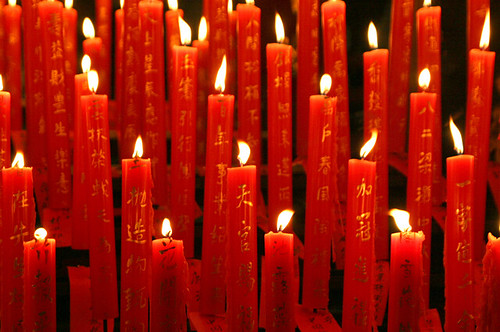
Chapter Three: Lindo Jong - The Red Candle; symbol
Chapter Two: An-Mei Hsu - Scar; anecdote.

Chapter one: Jing-Mei Woo - The Joy Luck Club; narrator.
The Joy Luck Club commences with June as the narrator. The book has many different mothers and daughters sharing anecdotes of the Joy Luck Club. In the club, men and women come together to socialize about life in America and play mah jong. As the reader continues with the story, they learn that June's mother died 2 months ago. June's mother is strong and intelligent. She says, "My mother could sense that the women of these families also had unspeakable tragedies they had left behind in China and hopes they couldn't begin to express in their fragile English" (20). This quote explains some of the reasoning for the Chinese families coming to America. The reader does not know what the tragedies are, but the tragedy is there. When leaving China, these families had to leave behind many things. Some were good; some were bad. The Joy Luck Club was something they had to leave behind, so June's mother wants to begin that in the United States. After her mom's death, June is expected to take her mom's place in the Joy Luck Club. We end the chapter learning of June thinking of returning to Shanghai to meet her sister's.
Subscribe to:
Comments (Atom)